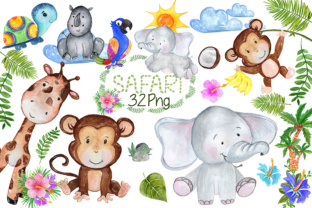
Safari Animals Clipart and Illustrations
As a brand designer who has spent years curating visual identities for small businesses and digital entrepreneurs, I approach every new graphic design asset with a critical eye. My goal is never just to find something pretty; it is to find a tool that solves a communication problem. Recently, while preparing a content kit for an eco-friendly children's clothing line launching a summer collection, I evaluated the Safari Animals Clipart pack. The brief was clear: we needed visuals that felt adventurous and organic without sacrificing the professional polish required for commercial design. Here is my honest review of how this specific set of Illustrations performs in a real-world marketing workflow.
First Impressions: Mood, Tone, and Audience Perception
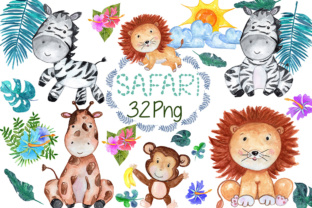
The moment you open the file library for Safari Animals Clipart, the emotional tone is immediately established. Unlike generic stock photos that can feel sterile or overused, these illustrations carry a sense of playful curiosity. For a brand targeting parents, educators, or lifestyle creators, this mood is invaluable. It signals warmth and approachability. In the context of our children's clothing campaign, the assets did not feel like random decorations; they felt like characters inviting the audience into a story.
However, the suitability of these design assets depends entirely on your brand positioning. If you are building a luxury, minimalist aesthetic, these vibrant creatures might feel too busy. But for small business branding focused on family values, handmade goods, or educational content, the style strikes a perfect balance between whimsical and refined. They avoid the "cartoonish" trap that often undermines professional branding, offering instead a modern, hand-drawn quality that resonates well on social platforms.
Integrating Assets into Real Marketing Campaigns
In our actual project, we used the Safari Animals Clipart across multiple touchpoints to test its versatility. For our social media graphics on Instagram and Pinterest, the high-resolution PNG files allowed us to layer the animals over textured backgrounds without losing clarity. We created carousel posts where each slide featured a different animal representing a product benefit—strength, agility, and comfort. This visual storytelling significantly improved engagement compared to text-heavy slides.
We also explored using these Illustrations for packaging design and product labels. By scaling down a lion and a zebra silhouette, we created a subtle watermark effect on our shipping boxes. This turned a mundane unboxing experience into a branded moment, reinforcing audience trust through attention to detail. Furthermore, we utilized the vector capabilities of the SVG design files to create scalable icons for our website headers and email banners. The ability to resize these elements without pixelation is crucial for maintaining a consistent visual hierarchy across desktop and mobile views.
Strategic Applications for Content Creators
- Hero Graphics: Use the larger, more detailed animals as focal points for landing pages or campaign headers to grab attention instantly.
- Email Banners: Incorporate smaller silhouettes to break up text blocks in newsletters, guiding the reader's eye toward the call-to-action.
- Canva Templates: These assets integrate seamlessly into Canva templates, allowing non-designers to create polished marketing visuals quickly.
- Printable Promotions: Create downloadable activity sheets or event flyers for community engagement, leveraging the printable design aspect of the files.
- Merchandise: Apply the designs to stickers, tote bags, or t-shirts to extend the brand identity beyond digital screens.
Enhancing Brand Identity and Visual Consistency
One of the biggest challenges in content marketing is maintaining consistency while keeping content fresh. A cohesive brand identity relies on recurring visual motifs. Safari Animals Clipart provides exactly that. By selecting a specific color palette from the illustrations and applying it to your typography and background colors, you create a unified look that builds recognition.
When we tested these assets against our competitor's visuals, which relied heavily on generic photography, our campaign stood out. The use of custom-style Illustrations gave us a unique voice. It suggested creativity and care, qualities that customers associate with premium digital products and thoughtful service. This distinctiveness is vital for small business owners competing in crowded marketplaces. It transforms a standard promotional post into a memorable brand experience.
Practical Designer Notes: Testing and Optimization
Before committing any graphic design asset to a paid campaign, rigorous testing is essential. Here are the specific checks I performed with the Safari Animals Clipart pack to ensure it met professional standards:
- Color Palette Integration: I tested the assets against both warm earth tones and cool pastels. While they shine in natural palettes, I found that desaturating them slightly worked better for more muted brand schemes.
- Black and White Usage: For editorial design or monochrome branding, I converted the images to single-color outlines. The clean lines held up well, proving their utility for diverse applications.
- Font Pairing: I paired the clipart with various typefaces. It complemented rounded sans serif font styles perfectly for a friendly vibe, but also worked surprisingly well with bold display font styles for impact. However, pairing them with delicate script font or handwritten font styles required careful spacing to avoid visual clutter.
- Mobile Readability: I previewed the designs on mobile screens. Some of the more intricate details were lost at very small sizes, so I recommended using simplified versions for app icons or tiny ad formats.
- Licensing Verification: Always confirm the commercial license terms before using assets in client work or for sale. Ensure the creative marketplace seller grants rights for unlimited commercial use, including merchandise and advertising.
Where to Exercise Caution
While Safari Animals Clipart is a powerful tool, it is not a universal solution. There are scenarios where these Illustrations should be used carefully or avoided altogether. In formal corporate branding or legal communications, the playful nature of safari animals can undermine the seriousness of the message. Similarly, in dense information layouts or text-heavy ads, adding complex illustrations can distract from the core value proposition.
Avoid using these assets on low-contrast backgrounds where the details might get lost. If your brand leans heavily towards ultra-minimalism, introducing detailed animal figures might clash with the "less is more" philosophy. The key is to ensure the asset supports the message rather than competing with it. In our campaign, we kept the animals to one side of the layout to maintain a clear visual hierarchy, ensuring the product remained the hero.
Final Verdict for Creative Entrepreneurs
For designers, bloggers, and digital sellers looking to elevate their marketing visuals, Safari Animals Clipart offers significant value. It bridges the gap between professional polish and creative flair. Whether you are designing a logo design element, creating a design bundle for your clients, or simply refreshing your web design headers, these assets provide a flexible foundation.
By integrating these modern design elements thoughtfully, you can craft campaigns that not only attract attention but also foster an emotional connection with your audience. The result is stronger brand recognition, improved engagement, and a visual identity that feels both authentic and strategically sound. If your project calls for adventure, warmth, and a touch of nature, this clipart collection is a worthy addition to your creative toolkit.